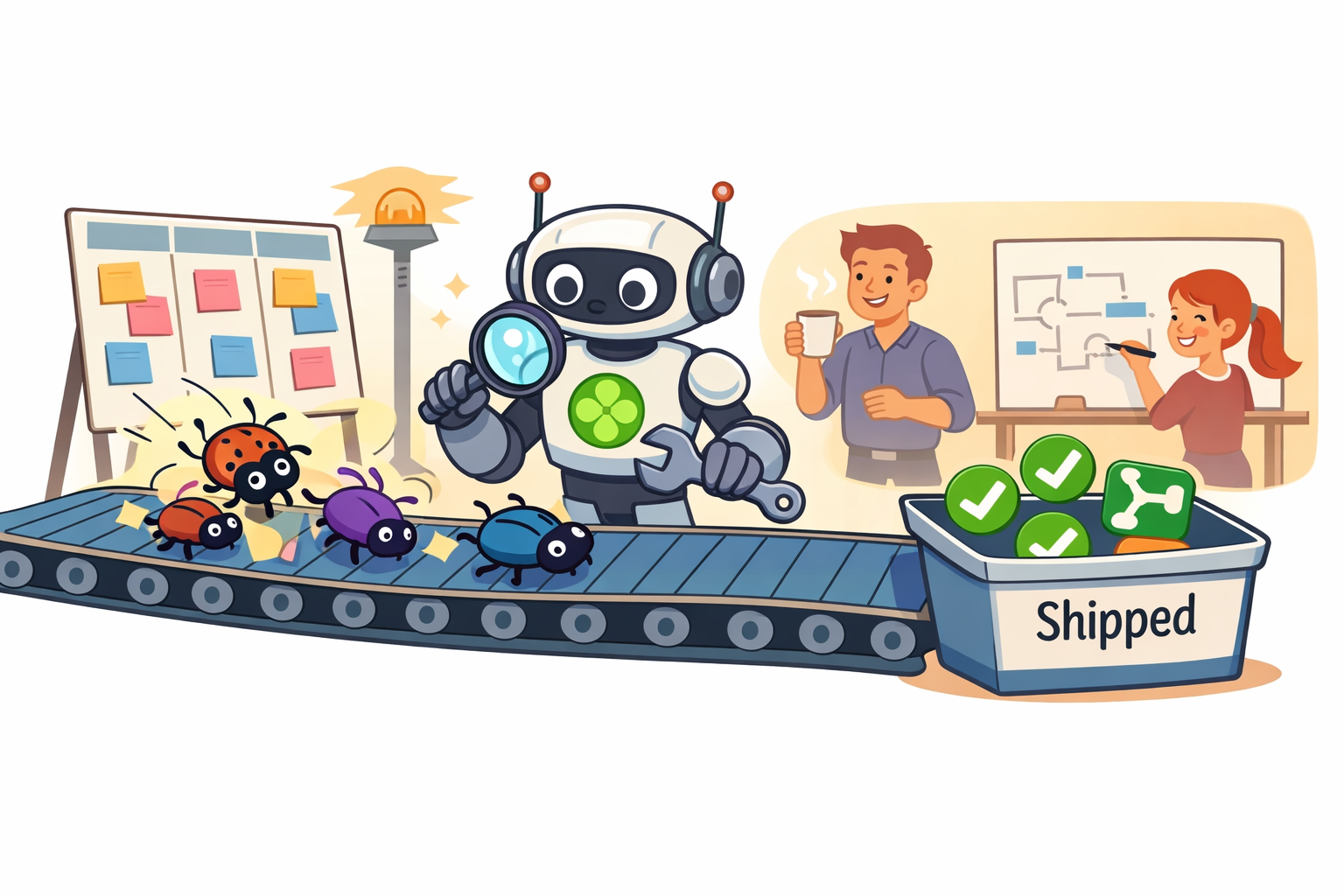
Every engineering team knows the feeling: bugs pile up faster than you can fix them. Since Highrise launched, our players have been incredibly active in reporting issues - which is great for the game, but created a backlog that our engineering team simply couldn't keep up with. No matter how fast we worked, the queue of Shortcut tickets always seemed to grow faster than we could shrink it.
Today, that's no longer a problem. By building a Slack bot powered by Claude agents, we've effectively given our engineering team the ability to scale infinitely. When a bug lands in Shortcut, our bot picks it up, investigates the codebase, and ships a fix — often before an engineer even opens the ticket. Those pesky bugs that used to linger for weeks? They're getting squashed automatically, letting our team focus on building the features that make Highrise better.
How It Works
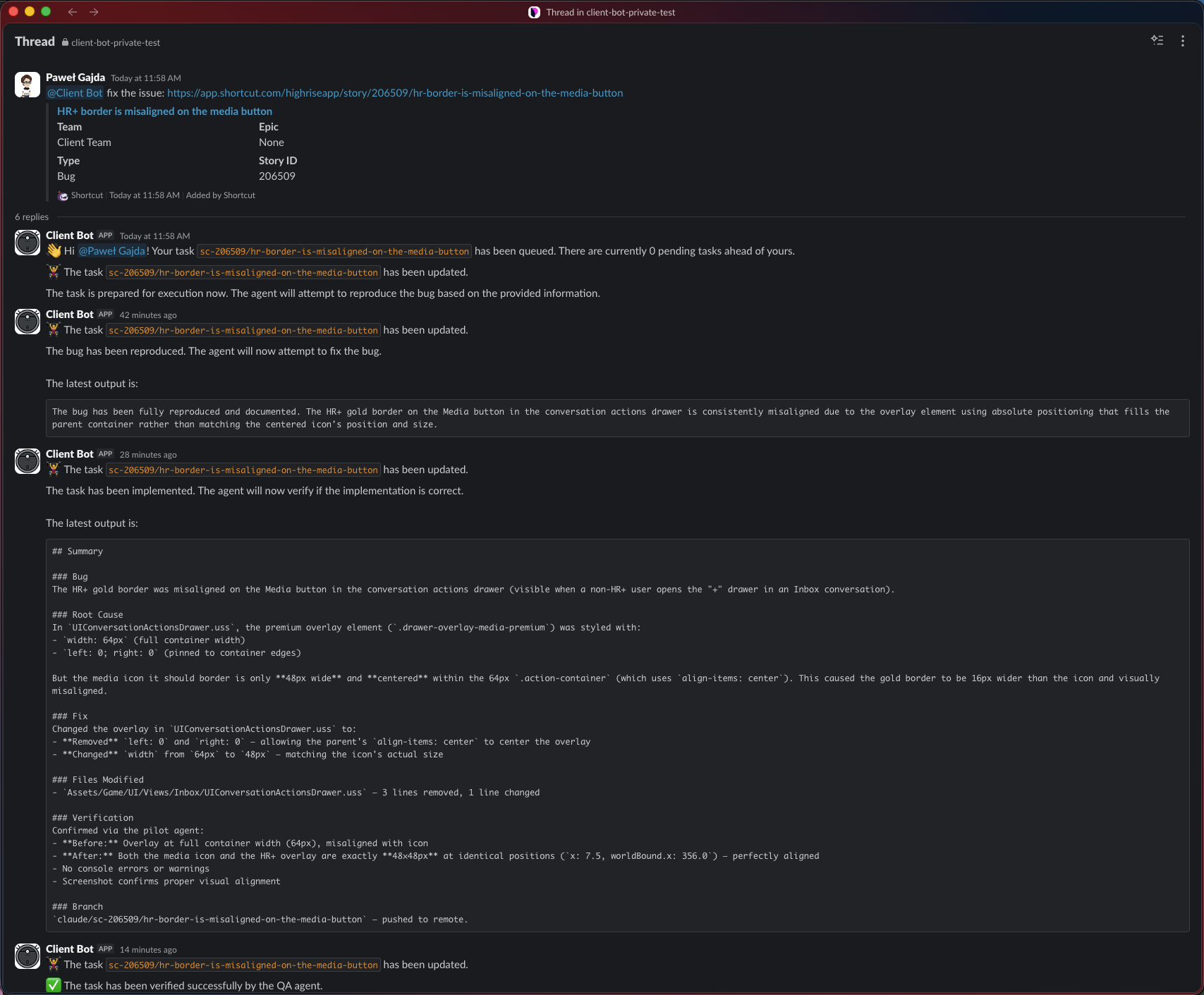
It starts with a simple Slack mention. Anyone in the company - not just engineers - can tag @Client Bot with a description of the issue or paste a link to a Shortcut ticket. From there, the bot takes over. It analyzes the problem, attempts to reproduce it, writes a fix, and verifies that the fix actually works. Every step of the process is reported back in a Slack thread with clear, readable updates, so you always know exactly what the bot is doing and why. If the bot needs more context, it asks follow-up questions right in the thread, maintaining full conversational awareness throughout the interaction.
Once the fix is verified, the bot doesn't stop there. It automatically triggers our CI/CD pipeline to build a fresh version of the app, putting the fix directly into the hands of whoever reported it. The original author can then verify whether the fix matches their expectations - and if it doesn't, they can continue the conversation in the same thread to iterate further. The entire loop from bug report to testable build happens without a single engineer needing to context-switch.
Under the Hood
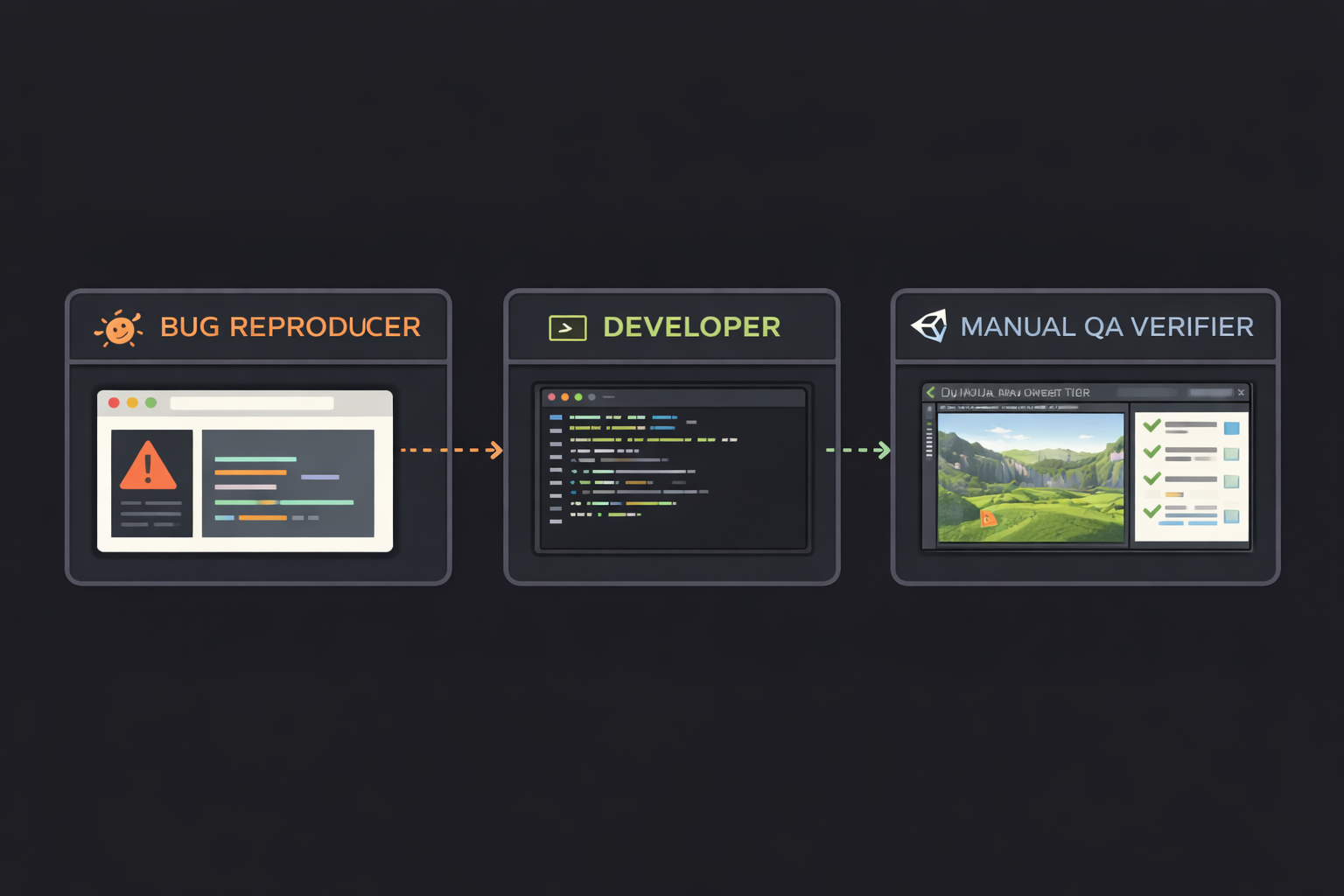
The bot is powered by three specialized Claude agents, each with a distinct role: the Bug Reproducer, the Developer, and the Manual QA Verifier. Every agent operates with its own tailored set of instructions and maintains a context file relevant to its work, while each successive agent has full access to the output of the one before it. This chain-of-responsibility architecture keeps each agent focused and its reasoning easy to follow.
The Bug Reproducer and QA Verifier never touch the application source code directly. Instead, they communicate with a specialized Pilot agent that knows how to operate a local Unity Editor instance - logging into the game with test accounts across different environments, navigating the app, and reading console and network logs. The Developer agent, on the other hand, works solely with the codebase to implement the fix. This clear separation of concerns makes the entire pipeline auditable: at any point, you can step through each agent's output and verify that it followed the right path to squash the bug.
The Results
The impact has been immediate. Just two weeks after launching the bot, we've already shipped a dozen fixes without an engineer writing a single line of code. In some cases, issues were resolved by QA team members the very same day players reported them - no engineering triage, no sprint planning, no waiting.
The range of fixes has been impressive too. From simple UI misalignment corrections to right-to-left text improvements, all the way to more substantial tasks like surfacing user IDs and app version numbers in every error dialog across the game. These are the kinds of issues that individually feel small but collectively eat up enormous amounts of engineering time - exactly the type of work the bot excels at.
We've never been able to resolve this many issues in parallel before. Our engineers are already seeing the difference:
I was skeptical at first, but I was stunned to discover how many things the bot can do on its own. It frees up tons of space to focus on designing high-impact features while keeping the players happy.
What's Next
This is just the beginning. As we continue expanding the bot's capabilities and equip it with the skills to reproduce a wider range of reported bugs, the plan is to remove the Slack bot entirely. Instead, the agent will run autonomously overnight, pulling directly from our public issue tracker and attempting to fix every newly reported bug before the team even starts their day.